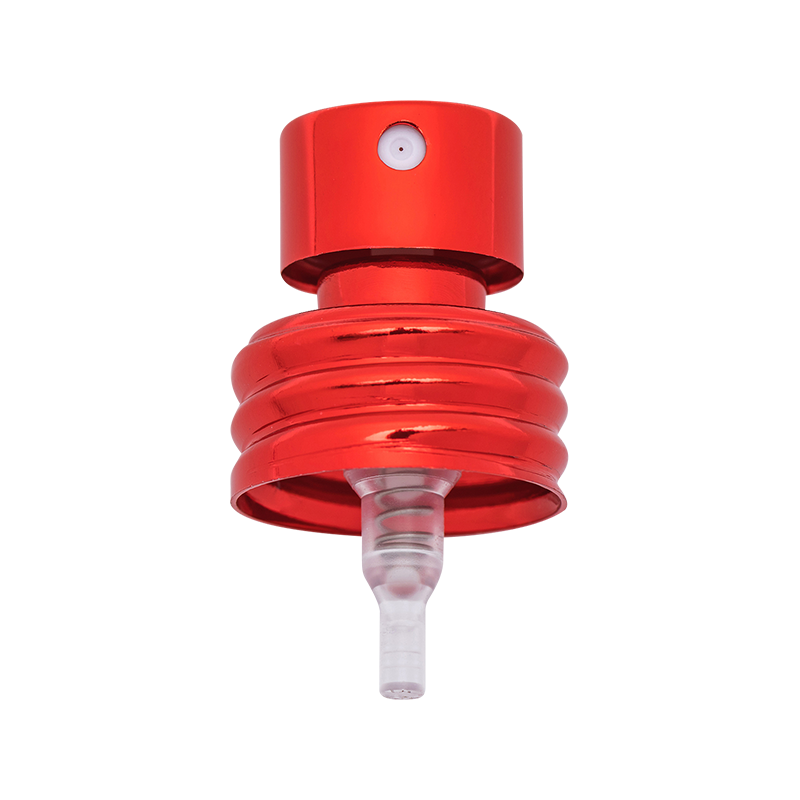
Den 13/415 parfumepumpe —referring to the standard neck finish diameter ($13\text{mm}$) and thread depth—is the backbone of modern fragrance packaging. For fragrance brands and B2B buyers, the pump's performance is intrinsically linked to product quality and consumer safety. The engineering challenge is complex: the pump must not only deliver a precise dose but also function as a hermetic seal, preventing the highly volatile alcohol and precious fragrance oils from escaping during long-term storage and extreme conditions, such as the low-pressure environment encountered during air transportation. Zhangjiagang XinYe Chemical Sprayer Co., Ltd., founded in 2006, operates across three production bases, utilizing a complete production chain from aluminium stamping and injection moulding to automated assembly and full-auto inspection equipment. Our commitment—"ensuring quality for survival"—is demonstrated through our rigorous adherence to technical excellence, enabling us to provide globally renowned sprinkler heads and secure ISO9001-2008 quality system certification.
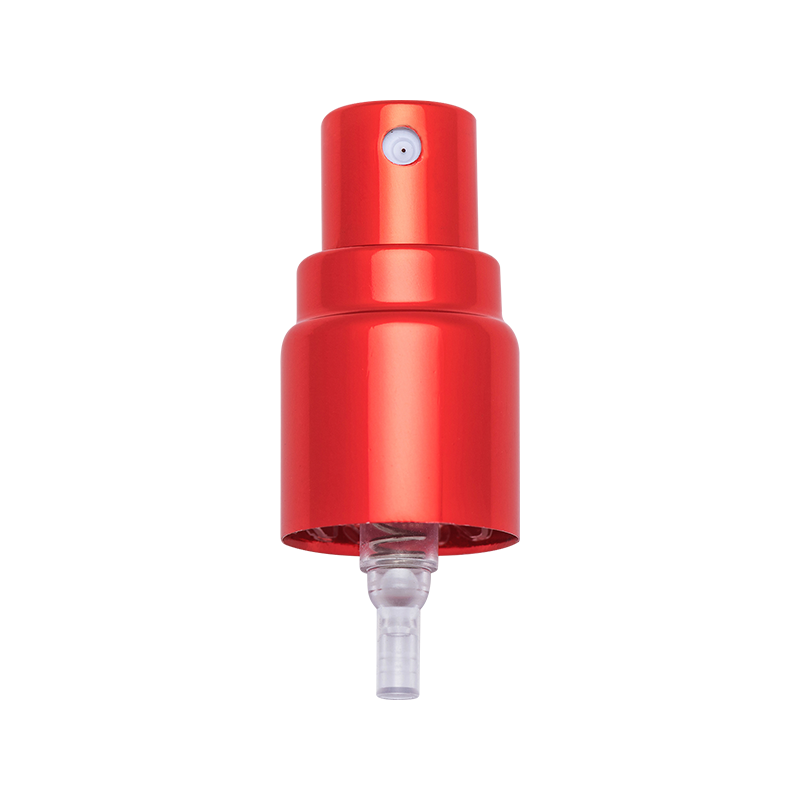
XY-LK-13/415 13mm Skrue parfume fin tåge pumpesprøjte
Den primary internal sealing component of the 13/415 perfume pump is the gasket (or valve seal). Its function is dual: preventing liquid perfume leakage and acting as a vapor barrier against alcohol evaporation. This requires sophisticated gasket material selection for fragrance alcohol retention.
Den gasket material must exhibit low permeability to ethanol and essential oils, and demonstrate long-term chemical compatibility (i.e., no swelling or degradation) with the fragrance formula. Materials like NBR (Nitrile Butadiene Rubber) or standard PE are often unsuitable due to high alcohol swell or permeability. The effectiveness of the material is quantified by its Permeability Coefficient ($P$), which is the product of the Diffusion Coefficient ($D$) and the Solubility Coefficient ($S$). Lower $P$ is desired.
| Pakningsmaterialetype | Primær struktur | Alkoholpermeabilitet (relativ) | Dampspærreegenskaber ved parfumepumpepakningsegnethed |
|---|---|---|---|
| Buna-N/NBR (Standard Nitril) | Standard elastomer | Høj; tilbøjelig til hævelse/nedbrydning. | Generelt dårlig til høje alkoholkoncentrationer. |
| Butylgummi/komposit | Polymer/laminat med høj densitet | meget lav; høj kemisk resistens. | Fremragende på grund af lave diffusionshastigheder; kritisk for lang holdbarhed. |
Den appropriate material provides the required vapor barrier property of perfume pump gasket, which is essential for preserving the product's quality over its guaranteed shelf life.
At opnå en effektiv tætning kræver præcis kontrol over komponentens geometri og den kraft, der påføres under samlingen. I 13/415 parfumepumpen er den primære ventilpakningstætning afhængig af en kontrolleret kompression, der skal opretholde kontakttrykket over år. Overkompression kan permanent deformere materialet, hvilket fører til spændingsafslapning og eventuel tætningsfejl, mens underkompression forårsager øjeblikkelig lækage. Vores automatiserede monteringsudstyr sikrer, at kompressionskræfterne er inden for strenge tekniske tolerancer.
Den second critical sealing point is the connection between the pump neck and the bottle finish. This can be a screw connection or a crimp connection.
Den 13/415 pump thread design leak prevention relies on the mating of the cap's internal seal (often a polyethylene cone or disc) against the top edge of the glass bottle neck. A crimp connection, utilized in many high-end fragrances, achieves a more durable, permanent seal through mechanical deformation of the aluminium ferrule.
| Tilslutningsmetode | Seglintegritetsmekanisme | Genlukkelighed/manipulationsmodstand | Sprayer Crimp Integrity Verification Protocol Nødvendighed |
|---|---|---|---|
| Skrue (gevind) | Pakningskompression mod flaskekanten. | Genlukkelig (tillader åbning/lukning). | Lav (fokus på drejningsmoment/pakningskompression). |
| Crimp (snap/mekanisk lås) | Permanent, mekanisk tætning af aluminiumshylster på glasset. | Ikke-genlukkelig (Høj manipulationsmodstand). | Høj; kræver trækstyrke og lækagetest. |
For crimptætninger er sprøjtens crimpintegritetsverifikationsprotokol (inklusive aftrækskrafttest og bobletest) altafgørende for at bekræfte tætningens modstandsdygtighed over for mekanisk fejl og internt tryk.
Under luftfragt overstiger det indre tryk i en forseglet parfumeflaske det reducerede ydre atmosfæriske tryk. Hele pumpens struktur – inklusive ventiltætningen og krympe/gevind-grænsefladen – skal modstå denne trykforskel uden at tætningen giver efter, hvilket ville resultere i enten bulkvæskelækage eller for stort damptab. Den strukturelle integritet, som 13/415 pumpegevinddesignet forhindrer lækage, er nøglen her.
Den perfume sprayer evaporation rate testing standard is the definitive metric for guaranteeing product shelf life. It moves beyond simple leak testing to quantify the cumulative loss of product mass due to alcohol permeation through the gasket and micro-leakage points while the pump is in the closed position.
Gravimetrisk testning er standardmetoden til B2B kvalitetskontrol:
Den maximum acceptable mass loss due to evaporation is typically specified as $<0.1\%$ to $<0.5\%$ of the total volume per year. Any loss exceeding this indicates a failure in the vapor barrier property of perfume pump gasket or the primary seal, requiring re-evaluation of the pump design or material selection.
Den performance of the 13/415 perfume pump is a function of advanced material science and automated manufacturing precision. From the selection of low-permeability materials for gasket material selection for fragrance alcohol retention to the rigorous sprayer crimp integrity verification protocol, every step ensures that the product meets the demands of global logistics and extended shelf life. Zhangjiagang XinYe Chemical Sprayer Co., Ltd., leveraging our integrated production chain and automated inspection equipment, is committed to providing robust, compliant, and globally renowned perfume sprayer heads that adhere to the strictest perfume sprayer evaporation rate testing standard.
Tel: +86-13812990918
Phone: +86-512-58962260
Address: No.3, Xiangqun Road, Leyu, Zhangjiagang.